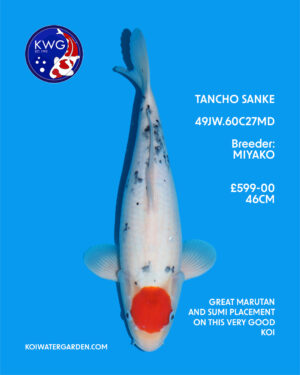
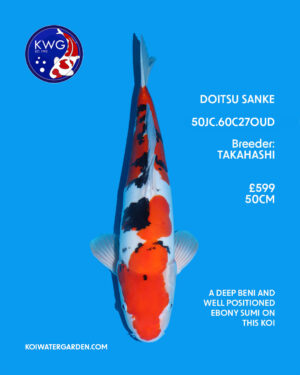
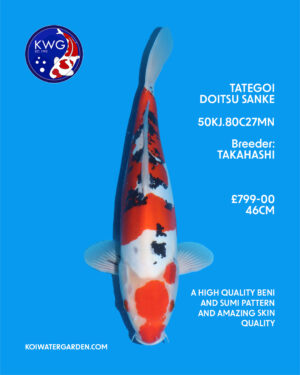
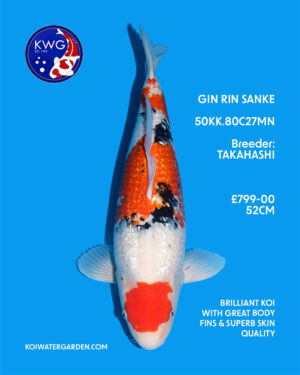
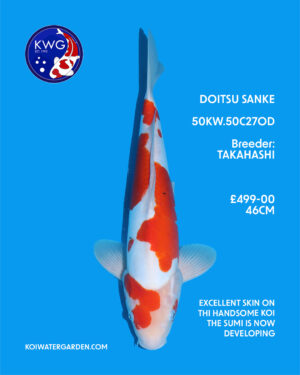
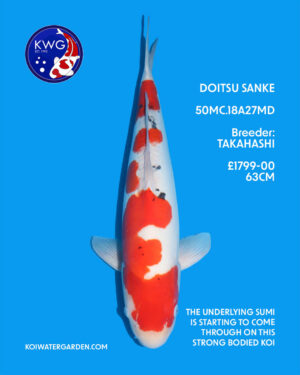
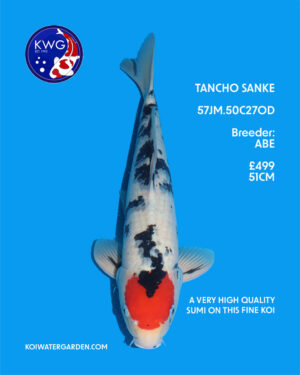
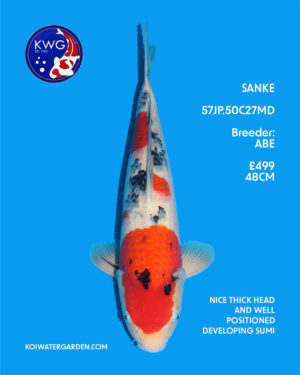
Sanke, formally known as Taisho Sanke, are one of the most iconic and beloved varieties of Japanese koi. Celebrated for their striking tri-coloured patterns of white, red, and black, Sanke koi are a staple in koi collections and a favourite in koi shows worldwide. Their elegance and balance make them a timeless representation of Japanese koi artistry.
Sanke are a cornerstone of Japanese koi breeding, representing the perfect blend of tradition and artistry. Their tri-coloured beauty makes them a standout in any koi pond, while their historical significance adds depth to their appeal. Whether you are a seasoned collector or new to koi keeping, the elegance and charm of Sanke make them an essential and rewarding addition to any collection. Their timeless appeal ensures they remain one of the most sought-after varieties in the world of koi.
History and Origin
The Taisho Sanke was first developed during the Taisho era (1912–1926) in Japan, hence its name. Breeders sought to enhance the red and white beauty of Kohaku koi by introducing black (sumi) markings. This resulted in a variety that combines the purity of Kohaku with a dynamic and balanced aesthetic created by the addition of black. Over decades, breeders refined the Sanke, producing the exquisite patterns and vibrant colours we see today.
Characteristics of Sanke
Sanke are defined by their tri-coloured patterns and clean, elegant appearance. Key features include:
1. White Base (Shiroji): The foundation of a Sanke is a pure white body that provides a clean backdrop for the red and black markings. The quality of the white base is a key factor in evaluating a Sanke’s beauty.
2. Red Markings (Beni): The red patterns, inherited from Kohaku, should be vibrant and evenly distributed across the body. High-quality Sanke koi have well-defined red markings with clean edges.
3. Black Markings (Sumi): The black markings are typically bold and sharp, adding contrast and depth to the koi’s appearance. Unlike Showa, the black on a Sanke does not appear on the head and is usually confined to the body and fins. Modern style Sanke display smaller style sumi patches that are often sparsely distributed over the body, whereas traditional style Sanke offer heavy style sumi that are often scattered across the back of the fish. Generally speaking, Sumi sits above the lateral line and is often placed ‘from above’ as opposed to the deep wrapping of the Showa.
4. Elegant Balance: A high-quality Sanke koi displays a harmonious distribution of all three colours, with each element complementing the others.
Sanke are admired for their balance of simplicity and complexity. The interplay of red and black on a white base creates a dynamic and elegant aesthetic that captivates viewers. Their patterns are versatile and can range from bold and dramatic to subtle and refined, making each Sanke koi unique.
Variations of Sanke
Breeders have developed subtle variations of Sanke koi to suit different preferences:
• Traditional Sanke: The classic tri-coloured pattern with a strong emphasis on balance and contrast.
• Doitsu Sanke: A scaleless variation that enhances the clarity of the colours and patterns.
• Gin Rin Sanke: Featuring glittering, reflective scales that add a shimmering effect to the traditional pattern.